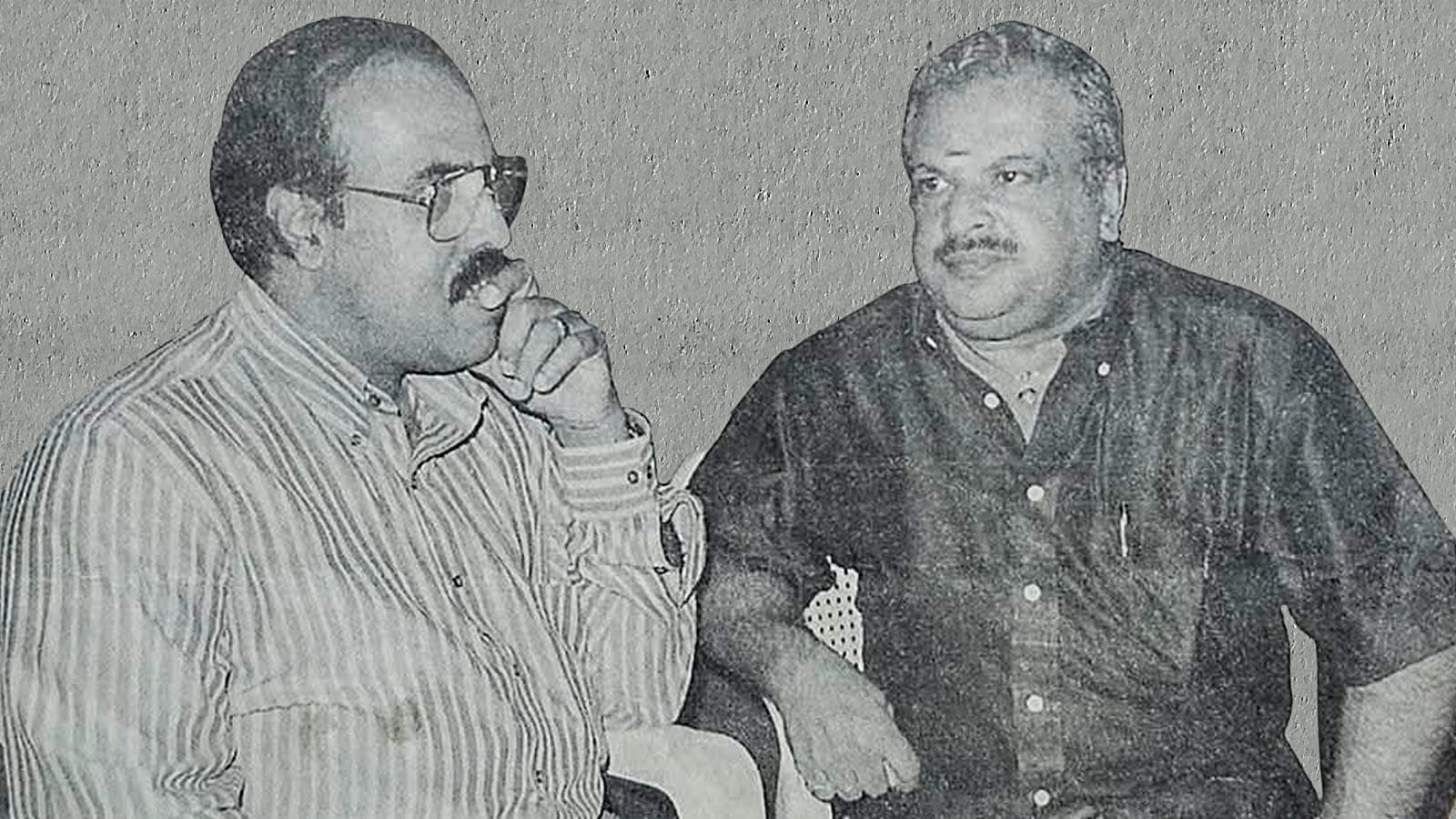

 Dr. V. K. Mohanan
 Gulf Times
A touch of silvery gray has added a tint of sheen to the receding hairline. The face now looks more rotund with the addition of a double chin. That was all what I could perceive as the signs of age catching up with Jayachandran, the celebrated playback singer from south India who was in Doha recently. The mellifluous voice however, has lost none of its silky smoothness. I spoke to him after two successful shows organised by Charishma Arts Doha. He looked happy and relaxed understandably after singing to packed crowds which he loves. He spoke at length about his life, early days and career so far:
Q: I understand that your wife has been suffering from some ailment that required you to be with her. Yet you chose to come to Doha.
Jayachandran: I had committed to Charishma Arts to attend the programme which was done in memory of late Sri Vayalar Ramavarma whose lyrics I had been fortunate to sing, some of those immortal songs, as you know, made me what I am today.
Q: You started out as a sales representative in your early days. How did the breakthrough into playback singing come through?
J: In those days people would have laughed if someone said that he was making a career of music. Musicians were a poorly paid lot. I remember that some of the noted Carnatic musicians were paid only a dakshina (a token amount) for their concerts. So I had to make sure that I had a job to begin with. But it is heartening to know how times have changed. Today even virtually unknown singers have a lot of media exposure, sponsorships and an assured income. After my untiring efforts I was invited to sing a song written by P. Bhaskaran and composed by Chidambaranath for the film Kunjali Marakkar. The song Oru mulla poomalayumay was my first song to be recorded.
But before the film was released, director Vincent who heard me singing in one of the stage programmes in Madras recommended my name to Sri Devarajan Master. Thus I sang the song Manjalayil mungithorthi for the film Kalithozhan written by P Bhaskaran and composed by Devarajan in the year 1967. The song became a runaway hit and I have never had to look back ever since.
Q: You and K J Yesudas started singing at about the same time, but somewhere along the line you fell out. Also so much has been written about the rivalry between you two. Is there any truth in it?
J: Actually it is a big joke. We had been and still are very good friends. Whenever we used to meet, Das used to advise me to dye my hair. Besides I am a great fan of his. It would be unfair to compare our careers. I believe that each person is guided by his own destiny.
Q: I know that you had forayed into an acting career sometime back. Would you like to comment about it?
J: In fact I did two films. One was Krishnapparunthu in which I did the villain’s role. It was so vulgar and badly picturised nobody including me liked it. But I enjoyed playing the role of Namboothiri in the film Nakhashathangal. It was more down to earth. I had grown up with a lot of Namboothiris. My paternal grandfather and maternal grandfather were both namboothiris. I had been always fascinated by some of their character traits like flair for comedy, idiosyncrasies, penchant for good food and festive occasions. I think I was able to do justice to the character. However my flirtation with acting is something I would like to forget about.
Q: For a while you had disappeared into Tamil film music, but even that has become a rarity nowadays. Has that got anything to do with the decline of Ilayaraja and the rise of A R Rahman?
J: It would be wrong to assume that I have no opportunities to sing in Tamil films nowadays. I know my limitations and I cannot compromise myself to the demands of commercial cinema. While the demand for Ilayaraja might have declined, I cannot agree upon the lack of quality of his songs in comparison with that of Rahman.
Rahman’s music may be the pulse of this generation, but it might also be a passing fancy and the trend is not going to last since it is basically influenced by western music and has no underpinnings in Indian culture.
Q: What about your family. Does anyone in your family follow music?
J: My wife Lalitha, daughter Laksmi (24) and my son Dinanath complete my family. My son sings and plays the piano but unfortunately he does not believe in my kind of music.
Q: Can you tell me about the most unforgettable incident in your life?
J: The death of my elder brother was a biggest shock of my life. He was like a fatherly figure to me. He knew all the time that he had some serious ailment and had only a few days to live. Yet he faced death with courage and a smile.
Another unforgettable moment was when I visited my native place recently. The place where my ancestral home stood was no longer there. Even the old house had been demolished and commercial establishments had come up in its place. It is sad that difficult days might have prompted my relatives to sell the property off, but it saddens me more to think that my grandchildren would never be able to see the house where I spent my childhood and fine-tuned my musical skills.
Q: What about the future?
J: I am still busy with several singing assignments. Recently I recorded some songs for my forthcoming album Varaveena which has music composed by Vidyadharan, a real genius whose talents were never utilised in full. When I listened to a couple of songs from the album, I felt that I am singing better than ever. My only wish is that I should breathe my last while I am singing.
Related Articles
വെറുപ്പും വൈര്യവും മാന്യവികാരങ്ങളായി തീർന്നിരിക്കുന്നു
മാധവിക്കുട്ടിയുമായുള്ള അഭിമുഖം
AVM Unni Archives
1994
ഞങ്ങളുടെ യജമാനന്മാർ ജനങ്ങളാണ്
എസ്. ജോർജ്കുട്ടി വി.എസ്. അച്യുതാനന്ദനുമായി 1987ൽ നടത്തിയ അഭിമുഖം
കലാകൗമുദി
1987 ഡിസംബർ 20